


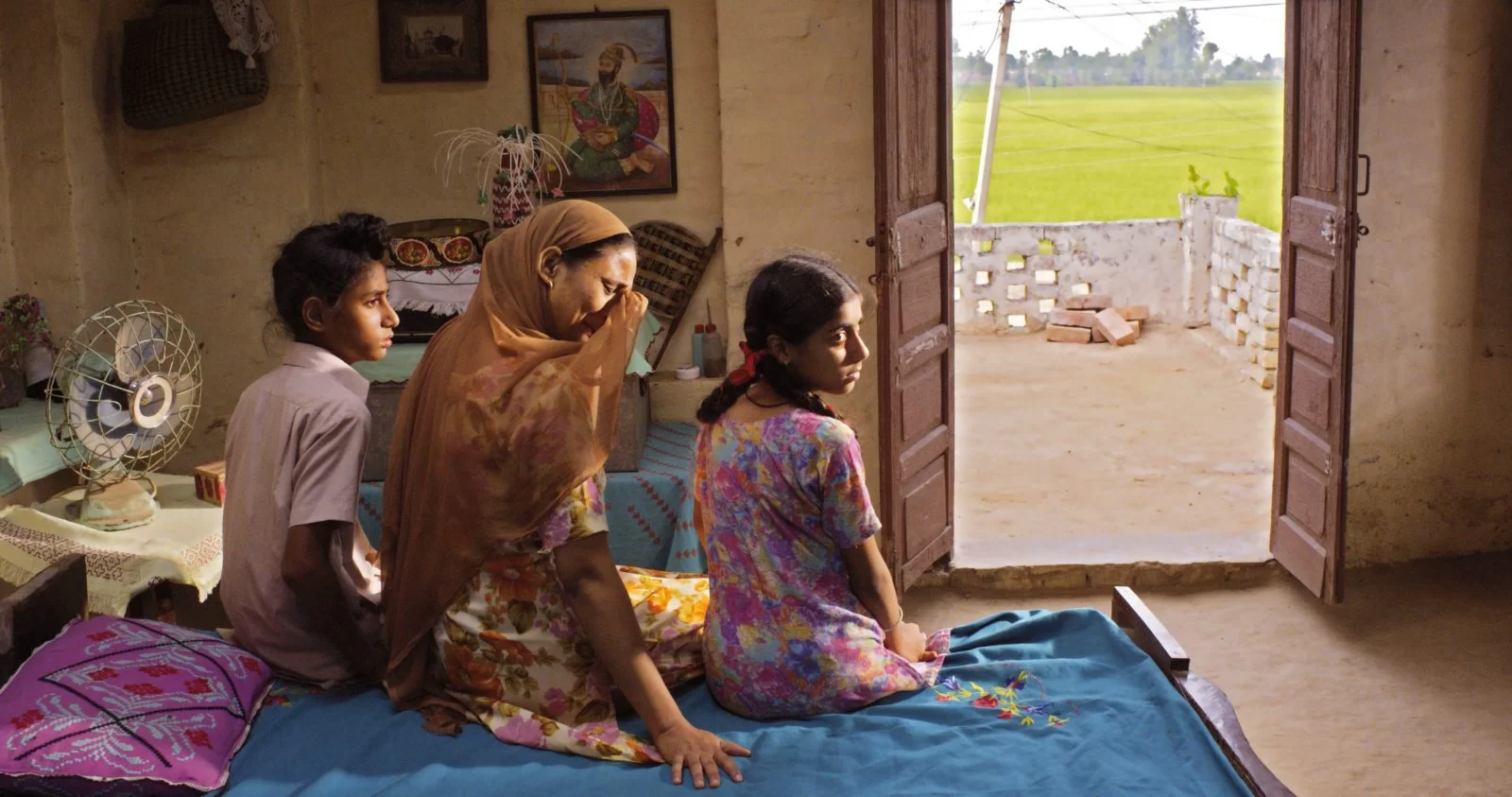
Rehmat is headed to Festival des 3 Continents’ International Competition during the festival’s November 20–28, 2026 edition. The programme identifies it as a 2026 India-France fiction feature, told in Punjabi and English, and describes a three-part narrative shaped by the division of Muslim, Hindu and Sikh communities in 1947.
Punjab under two kinds of historical pressure
Chauthi Koot offers the earlier point of comparison. Festival des 3 Continents presented the Punjabi-language fiction film in 2016 and situated its two episodes, set months apart, amid the 1984 crisis. Rural Sikh communities are caught between separatists on one side and the army and police on the other. That setting makes political fear an immediate condition of daily life rather than distant historical background.
Rehmat begins from a different rupture. Its festival description places the story in a present marked by Partition’s long aftermath, with tension and violence remaining part of the surrounding world. The comparison should not turn two distinct periods into one interchangeable Punjabi trauma: 1984 supplies the direct pressure in Chauthi Koot, while the separation of communities in 1947 provides the historical wound behind Rehmat.
A return built through new collaborators
The production credits reinforce that these are independent works rather than companion pieces by design. Singh shares the Chauthi Koot screenplay credit with Jasdeep Singh and Waryam Singh Sandhu; Satya Rai Nagpaul is credited for photography. On Rehmat, Singh is the credited screenwriter, Shashank Walia handles photography, Dupinder Kaur is credited for editing and Vinod Kumar Ram for sound.
The casts also offer one concrete line of continuity. Suvinder Vicky appears in both festival listings. Chauthi Koot includes Harnek Aulakh and Harleen Kaur among its performers, while Rehmat brings together Harwinder Aujla, Diya Kamboj, Naseeruddin Shah, Vicky and Navjot Randhawa. Shah gives the new ensemble a widely recognisable presence, but the film’s documented connection to Singh’s earlier work rests more firmly in its Punjab setting and historical concerns.
What the comparison reveals
The festival material supports a historical comparison, not a claim about Singh’s private intentions or the effect of scenes that have not been reviewed here. Even within that boundary, the pairing is revealing. Both films treat Punjab as a lived place where national ruptures alter relationships among neighbours, communities and institutions. Their difference lies in when that pressure begins and how close it sits to the characters’ present.
Rehmat now carries that conversation into a new festival season. Its scheduled screenings provide the confirmed next chapter, while Chauthi Koot remains the useful earlier reference—not because the two films repeat each other, but because each locates Punjab’s present inside a different unfinished history.

About Punjabi Mania News Network
Editorial team at Punjabi Mania. Passionate about bringing the latest updates from the Punjabi entertainment industry directly to you.
Discussion 0
Join the Conversation
Share your thoughts, reply to others, and become part of the community.